Gene Keyes Website
32nd ed.; latest update 2009-06-16

Various works by Gene Keyes (1941-2041)
sometime peace activist, political science prof, strategic nonviolent defense analyst,
and amateur in
Esperanto, world map cartography, science-fiction, and
HyperCard.

CONTENTS ( = Site Map)
(click on main category headings to scroll down to their more detailed title-links)
What's New 2009-06-16
and Site Updates List


Click above for complete list.
In this edition, see:

Why Cahill? What about Buckminster Fuller? "Evolution of the Dymaxion Map: An Illustrated Tour and Critique" [on 17 interlinked pages]. Summary: I love Bucky, but Cahill's map is a lot better. Here's how.


Prior update 2009-03-24
• Major re-organization of
B.J.S. Cahill Butterfly Map Resource Page:

    • New uploads of six Cahill articles
    • New link-list of online Cahill maps and articles
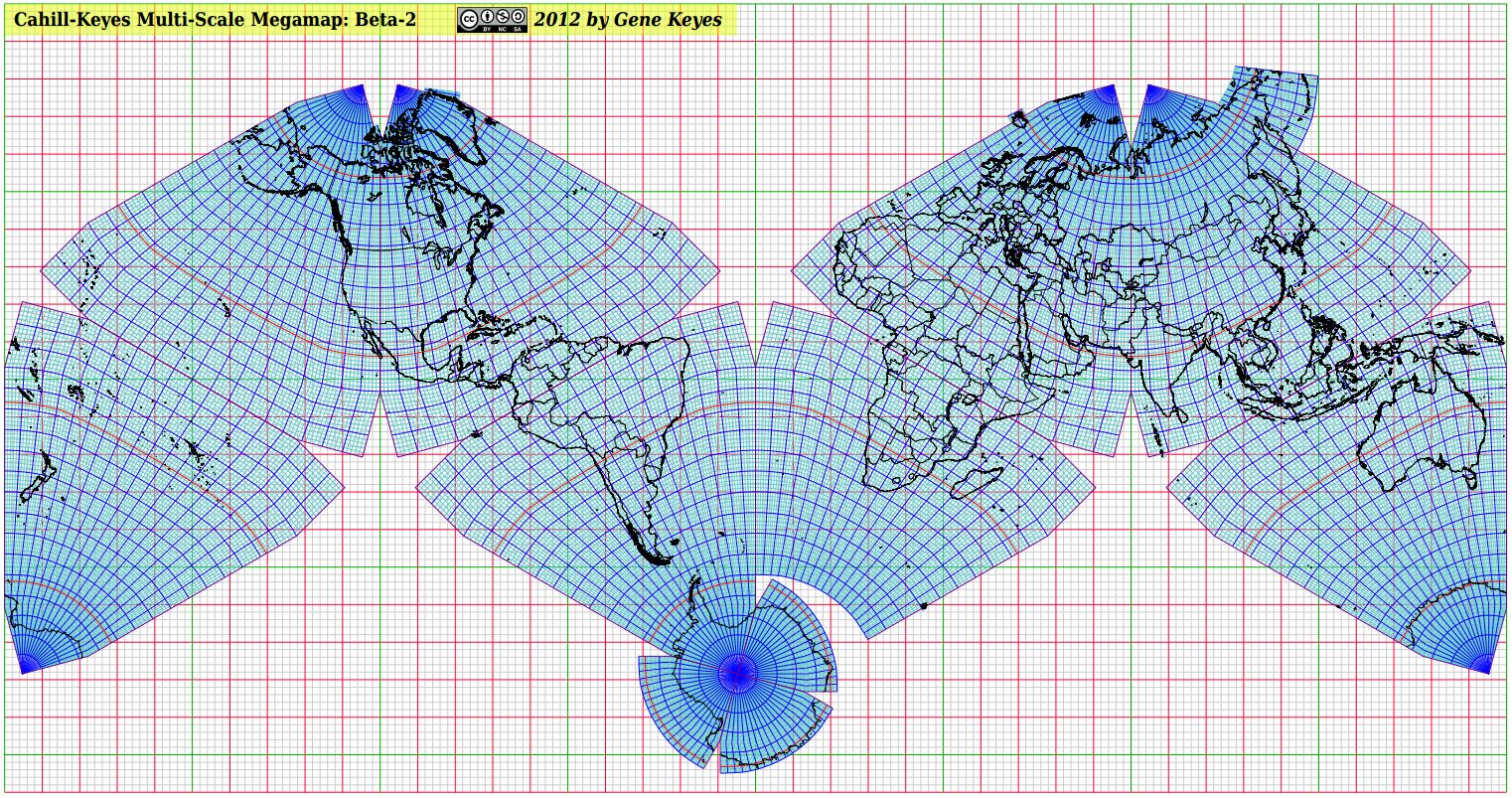
    • Reformatted Cahill-Keyes maps

• Recent uploads of
    • Cahill archive listings
    • Cahill Gallery 2: B.J.S. Cahill's Largest World Map, 1/12,500,000: Illustrated analysis with full-size online images

1) Strategic Nonviolence

1.1) Strategic Nonviolent Defense: The Construct of an Option

1.2)
Stalin's Finland Fiasco: Nonviolent Defense Clues from the Winter War

1.3) Heavy Casualties and Nonviolent Defense


1.4) Force Without Firepower: A Doctrine of Unarmed Military Service
(Be patient; this is a 2.2 MB pdf with illustrations.)

1.5) Mercy Force

1.6) Peacekeeping Buffer Action by Unarmed Forces

2) World Maps
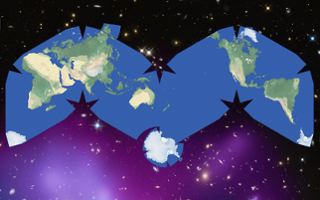
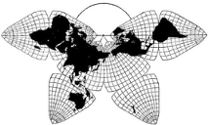
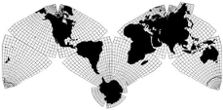
Cahill-Keyes M-layout world map silhouette including Antarctica
Cahill-Keyes "Real-World" Map (c. 1975, 2009)

2.1) Map drafts, (above; and):
            Here  1/200 M), scrolls down this page, or
            Here (larger, 1/100 M), separate page

2.2) Design notes

            "Notes on Scaling Cahill and Cahill-Keyes Maps"

2.3) Papers
            "Geocells and the Megamap"

2.4) B.J.S. Cahill Resource Page (many of Cahill's articles and map images)

2.5)
Why Cahill? What about Buckminster Fuller? "Evolution of the Dymaxion Map: An Illustrated Tour and Critique" [on 17 interlinked pages]. Summary: I love Bucky, but Cahill's map is a lot better. Here's how.

3) Esperanto

3.1) Dr. Esperanto's International Language
(the original 1887 pamphlet, online here)
3.2) Yuletide Carols / Jula Karolaro
3.3) The Me Clone / La Mi-Klono
3.4) Libraro Ludovika


4) HyperCard:
URLfriend 1.0


If you can still run a Mac with OS 9, here is a stack that can handle thousands of bookmarks. open any URL in any browser, and keep copious notes on each.

5) Helpful Hints for My Next Incarnation

Welcome back to earth; I presume we are still in the 21st century. These are some things you learned in your previous life when your name was Gene Keyes. I am giving you a headstart on them so that you don't have to spend years and years of re-learning.

5.1) How to Eat a Watermelon
5.2) How to Prevent Jock Itch with Rubbing Alcohol
5.3) How to Make a Moebius Towel (and Why)


6) Blog

Some current-affairs miscellany;
most recent:

6.8) The Identity Theft of Breyers Ice Cream

7) S-F: online book or zip,
The Me Clone / La Mi-Klono


a romantic comedy, somewhat s-f

romantika komedio, iomete s-f

8) Links: My other web pages
9) Presenting light verse and
poetry by my father,
Scott Keyes (1910-1992)


Scott Keyes (1910-1992)
10) Presenting poetry and
publications by my mother,
Charlotte E. Keyes (1914-1980)


Charlotte E. Keyes (1914-1980)
11) Presenting Works by Others

11.1) "The Mean Old Pacifist" (1963 antiwar song lyrics with MIDI; composer unknown)

[and see also]
(the original 1887 pamphlet, online here)


1) Strategic Nonviolence

Six GK articles reposted here:

1.1) STRATEGIC NONVIOLENT DEFENSE: THE CONSTRUCT OF AN OPTION (Journal of Strategic Studies, 4 / 2, 1981-06) p. 125-151 Condensation of my 1978 doctoral thesis; offers a newer theory of national nonviolent defense. HTML.
1.2) STALIN'S FINLAND FIASCO: NONVIOLENT DEFENSE CLUES FROM THE WINTER WAR (Crossroads: An International Socio-Political Journal, Number 17, 1985) p. 27-58. Reformatted in HTML, with extra material and maps.
1.3) "HEAVY CASUALTIES AND NONVIOLENT DEFENSE" (Philosophy and Social Action, 17 / 1 & 2, 1991-01/06) p. 71-88. Also, see introduction by Brian Martin. [Thanks to Brian Martin, http://www.uow.edu.au/arts/sts/bmartin/pubs/peace.html#lead.
1.4) "FORCE WITHOUT FIREPOWER: A DOCTRINE OF UNARMED MILITARY SERVICE" (CoEvolution Quarterly [now Whole Earth Review], #34, 1982 Summer) p. 4-25. Be patient; this is a 2.2 MB pdf with illustrations. [Thanks to Howard Rheingold and Whole Earth Review Special Collection at OSS.net.]
1.5) MERCY FORCE: "BIG HUMAN NEEDS CRY FOR BIG ANSWERS" (USA Today, 1992-02-24) p. 7A

1.6) PEACEKEEPING BUFFER ACTION BY UNARMED FORCES (Peace and Change: A Journal of Peace Research, Volume V, Numbers 2 & 3, Fall, 1978, p. 3-11

Go back to Contents

2) World Maps


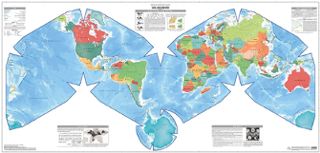
2.1) The Cahill-Keyes "Real-World" Map

Click here for a bigger: 1/100,000,000 version (40 cm wide or 16") (715 kb).

Below is a reduced preliminary draft printed in 1984:

Actual scale of original digital image is 1/200 million. But see note below.


|
0 km
0 mm

|
20,000 km
100 mm

|
40,000 km
200 mm


[Note: first line of bar scale above is constant; second line is variable. See below.]

c. 1975, 1980, 2006, 2009 by Gene Keyes.
(But I'm not a big stickler on intellectual property rights.)
;-)

Both are replicas of an existing 1/20,000,000 "Jr. Master" wall map 2 meters wide, and an exact floor plan of a proposed 1/1,000,000 "Mega-map" with sides 40 meters or 132' wide.

This map is adapted from the B.J.S. Cahill octahedral "Butterfly" projection, published in 1909. The graticule was newly devised, computed, and drawn by Gene Keyes in 1975, along with the coastlines, boundaries, and overall map design.


1975-11-11, original GK version
1980-05-02, first print
1984-02-15, second print
2006-04-22, first online posting
2009-03-22, re-formatted online posting


Scale adjustment for varying computer screens:

Your mileage may vary! Monitor size and settings make a difference. If the distance between the outer tics is 200 mm, then the map depicted is 1/200 million, as in its "original". In any event, the span shown is 40,000 km, representing the unfurled circumference of the earth.

This HTML web page and map jpeg were originally produced on a Mac G3 and a 19" LCD monitor with a resolution of 1024 x 768, + 75 hz. If you want the real scale as seen on your screen, measure the distance in millimeters (which is variable) between the first 2 numbered tics, then divide that into the kilometer distance (which is constant) at the middle tic, and add the term "million".* For example, on my 17" monitor hooked to a Linux Asus eee 701 with the same resolution, the midpoint distance is 89 mm, not 100, as in my "original". Dividing 89 into 20,000 indicates that on that monitor the scale is 1/225 million, not 1/200 million. See also my "Notes on Scaling Cahill and Cahill-Keyes Maps".


* The above division is a shortcut, to avoid entering a lot of zeroes in a calculator, and we take a readout of, say, 224.7.... as the fraction 1/225 million.

Metrically, the earth's circumference is approximately 40,000 kilometers, or 40,000,000,000 millimeters (forty billion), there being 1,000 millimeters in a meter, 1,000 meters in a kilometer, and 1,000,000 millimeters in a kilometer.

So if we have a [Cahill-Keyes] world map that is 200 millimeters long, equatorially, and the equator being 40,000,000,000 millimeters around, we make a fraction of

200 mm                   
40,000,000,000 mm

knock off a couple of zeros:

2 mm                   
400,000,000 mm

reduce:

1 mm                   
200,000,000 mm
 
and get the scale of 1/200,000,000. (Representative Fraction.)

Which is also to say:

Each millimeter on the map represents 200,000,000 millimeters on the ground.

Or, knocking off six zeroes to convert to kilometers, 200, we say that each millimeter on this map represents 200 kilometers on the ground.

Or, if your computer has made this map somewhat smaller than the original, as in my example above, then each millimeter represents 225 kilometers, not 200.


2.2) Design notes

"Notes on Scaling Cahill and Cahill-Keyes Maps"


2.3) Geocells and the Megamap

In a 1983 conference paper I coined the word "geocell" to designate a one-degree unit of latitude and longitude. That neologism has recently been (re?)-invented in several technical-military publications, which I cite as a PS to my online reprint here.
ABSTRACT: Broaches the concept of "geocell", one degree of latitude and longitude, as a design criterion for world maps and globes in general, and for a proposed 1/1,000,000 "Megamap" in particular: a single frame conspectus adapting B.J.S. Cahill's octahedral projection. Emphasizes proportionality of geocells in the Cahill-Keyes variant.
Read entire paper.


2.4)

B.J.S. CAHILL BUTTERFLY MAP RESOURCE PAGE
OCTAHEDRAL MAP OF THE WORLD
The Octahedral Butterfly Map of the World, by Bernard J.S. Cahill (1866-1944). first published in 1909, is a sadly neglected monument of world map design. This resource presents some of Cahill's articles, papers, and map variants, which he continued to develop during four decades until 1940.
Original 1909 Cahill Butterfly Map
2.4.1
Cahill's original Butterfly Map, 1909


To begin with, I have reproduced his original 1909 article, which, after a strong critique of the prevailing Mercator, sets forth the origin and logic of the Butterfly.
B.J.S. Cahill, "An Account of a New Land Map of the World"
(The Scottish Geographical Magazine, 1909-09) p. 449-469


2.4.2
Cahill elaborates on the Butterfly Map, and International Map of the World, 1912

Reproduced here in HTML is a 33 page article plus 50 illustrations, Cahill’s longest and most thoroughgoing exposition of his world map design, as published in the Journal of the Association of Engineering Societies in 1913 (orig. 1912). Over three decades before Buckminster Fuller’s 1943 Dymaxion map, Cahill had already created a far more elegant octahedral world map, and shown how it is designed for thinking “planetarily”.
B.J.S. Cahill, "A Land Map of the World on a New Projection"
(Journal of the Association of Engineering Societies, 1913-10; orig. 1912-10)
p. 153-207, with 50 illustrations. Reformatted in HTML by Gene Keyes.


The Cahill Gallery is an initial compilation of 25 versions of a Butterfly Map, from 1909 through 2007: Cahill's own variants and development, and more recent octahedrals by others.


2.4.4

Gallery 2: B.J.S. Cahill's Largest World Map, 1/12,500,000: Illustrated analysis with full-size online images


2.5

Why Cahill? What about Buckminster Fuller?

Evolution of the Dymaxion Map:
An Illustrated Tour and Critique

by Gene Keyes
2009-06-15

[on 17 interlinked pages]


Summary: I love Bucky, but Cahill's map is a lot better. Here's how.


Go back to Contents


3) Esperanto

Esperanto is the international second language for all countries, first presented in 1887 by Ludovic Lazarus Zamenhof; now with hundreds of thousands of users around the world. Here are some of my contributions to it:


3.1) My reprint, online or paper, of the original version:

Click here to read the entire HTML version of this 50-page classic:


The original 1887 Esperanto proposal,
back in print for a new millennium


Dr. Esperanto’s
International Language,


Introduction &
Complete Grammar


by Ludovic Lazarus Zamenhof

por Angloj


English Edition
translated by
R.H. Geoghegan
Balliol College, Oxford
1889

New printing,
edited and preface by
Gene Keyes
2000
Halifax, Nova Scotia: Verkista

HTML version with updated preface
2006
Berwick, Nova Scotia
Gene Keyes Website
http://www.genekeyes.com


3.2) My own Christmas carol translations, a set in progress: English and Esperanto, with melody score:

Yuletide Carols / Jula Karolaro

  • In English and Esperanto
  • Unabridged versions
  • Melody line for every verse
  • Guitar chords
  • Score printable as 8.5x11" jpegs
  • Or HTML lyrics only

  • En kaj la Angla kaj Esperanto
  • Netranĉitaj versioj
  • Melodio-linio por ĉiu strofo
  • Gitaraj akordoj
  • Partituro elpresebla kiel jpeg-oj, 8.5x11"
  • Aŭ HTML-lirikoj nure


[Ready so far:]
[Pretaj ĝis nun:]

Cantique de Noël / Canticle Noel
(O Holy Night)

new English and Esperanto translations
Kantik' de Noel'
novaj tradukoj, kaj Angla kaj Esperanta

Coventry Carol
Koventria Karolo
Good King Wenceslas
Venceslas' la Bona Reĝ'
Hark! the Herald Angels Sing
Aŭdu! Kantas Anĝel-ĥor


3.3) My science-fiction romantic-comedy novel, in English and Esperanto:

The Me Clone / La Mi-Klono


Now posted, online or as an HTML zip download: The Me Clone, a science-fiction romantic comedy, 33 chapters, 220-page equivalent. It also has a complete Esperanto translation, La Mi-Klono, in the adjoining column. Even if you don't read Esperanto, you might enjoy getting a little flavor of it this way.

To read the online version, click here for Contents of the e-book (with links to every chapter).

If you want to read it offline, download the HTML-zip version. The zip file is about 1 MB, and expands to about 3 MB. Be sure to follow the "Read Me" instructions. Update 2006-12-01: Problem with opening zip file on PC's now corrected.


3.4) An Esperanto library catalog I compiled for Dr. Stevens Norvell Jr.:


Libraro Ludovika
(originally in Halifax; relocated to Montreal in 2008)

Click below to read the catalog of Libraro Ludovika, North America's largest active Esperanto library, ca. 2,000 titles. Collected by Dr. Stevens Norvell Jr. in Halifax; indexed by GK:

Enkonduko [Introduction] and/or Katalogo [Catalog] (Both in Esperanto.)


Go back to Contents


4) HyperCard

URLfriend 1.0 is a versatile HyperCard stack for full-screen note-taking, managing, updating, and opening thousands of URLs in any browser. Works on Macs which can run OS 9. For full details and screenshot, go here.

icon

To download URLfriend 1.0, click icon above. The compressed file is 195 k; the unstuffed URLfriend folder is 520 k, comprising the Stack (163 k), two Read-me's (65 k each), and the Bookman font (228 k). My 2,900 URLs not included ...


Go back to Contents


5) Helpful Hints for my Next Incarnation
Welcome back to earth; I presume we are still in the 21st century. These are some things you learned in your previous life when your name was Gene Keyes. I am giving you a headstart on them so that you don't have to spend years and years of re-learning.
How to Eat a Watermelon
How to Prevent Jock Itch With Rubbing Alcohol
How to Make a Moebius Towel (and Why)

Go back to Contents


6) Blog

Some current-affairs miscellany, on a separate page of this website:

Blog Contents

A) Politics

2008-02-26 7) Obama's Afghanistan War

2006-08-18 6) Chester Bowles: A Liberal's Quotation on Prophecy

2006-06-08 4) Let the Veepstakes Begin

2006-06-07 3) Draft-Gore '08: A Front-Porch Campaign in Cyberspace?

2006-06-06 2) A Sherman Variant: "If nominated I won't run, but if elected I'll serve."

2006-05-30 1) Eugene McCarthy's 1960 Nomination Speech for Adlai Stevenson Presages Draft-Gore 2008


B) Commercial malpractice

2008-07-19 8) The Identity Theft of Breyers Ice Cream

2006-08-03 5) Call for Anchors' Revolt Against HeadOn Ads

This is not a full-fledged blog with comments, but feedback can be posted at the Daily Kos version of this page:
http://www.dailykos.com/user/esperanto41


Go back to Contents

7) Science Fiction

See link / description above (at #3, Esperanto) of my online or HTML-zip 33-chapter S-F romantic comedy, The Me Clone / La Mi-Klono, in adjoining English and Esperanto versions.

To read the online version, click here for Contents of the e-book (with links to every chapter).

If you want to read it offline, download the HTML-zip version. The zip file is about 1 MB, and expands to about 3 MB. Be sure to follow the "Read Me" instructions. Update 2006-12-01: Problem with opening zip file on PC's now corrected.


Go back to Contents


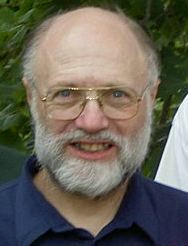
Gene Keyes: who, me?


b. 1941, Washington, D.C.
55 Douglas Ave., Berwick, Nova Scotia, B0P 1E0, Canada.

gene.keyes AT gmail DOT com